A few weeks ago, our discovery of the Cat Swamp Hijacking revealed a bit of a mystery: why was there a silk factory in Newton?
I think I might have found a viable answer during my visit to the Botto House. It may not be the complete reason Thomas Bentley moved his Paterson operations 45 miles away to Sussex County, but hey, it's a possibility.
As the silk industry became increasingly mechanized, mill owners started looking toward women and children to work the looms. The theory was that their smaller fingers and hands were better suited to the delicate silk work. Some enterprising manufacturers realized that they potentially had a ready workforce in communities where men were already at work in factories making other things. Paterson may still have been the capital of the American silk industry, but mills began rising in new towns.
Newton in the early 1900s would have fit the bill quite nicely. Hay forks, shoes and boxes were already being manufactured there, drawing male workers who inevitably would have wives and children. Bentley must have felt that with a bit of training from Paterson silk workers, the locals would be able to catch on to the trade fairly easily.
Tuesday, March 19, 2013


Sunday, March 17, 2013
The Botto house: uniting the workers of Paterson
It’s hard to imagine, but an unassuming century-old house in a cramped Haledon neighborhood was once the epicenter of a broad movement to improve industrial working conditions. The Botto house at 83 Norwood Street is now the home of the National Labor Museum, memorializing its role in the 1913 Paterson Silk Strike. On my recent visit I learned why silk workers stopped work and why Haledon became the nexus of the labor movement.
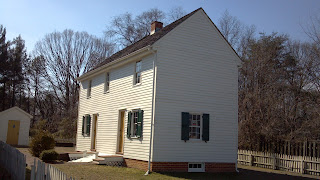
When I walked up to the porch and through the front door, I was struck by how cozy and welcoming the house is. Its original owners, Pietro and Maria Botto, were skilled silk workers who came to the United States from northern Italy in the 1890s. First settling in Union City, they bought five 25x100 lots in Haledon in 1908 to build their own house. The structure consisted of a ground floor with bedrooms, a parlor, kitchen, dining room and bathroom as well as a central hall. Upstairs, two railroad-style flats of three rooms and bathroom each were constructed to provide the family with rental income. A door at the front end of the upstairs hallway led outside to a porch that afforded a nice view of then-undeveloped land. The backyard included an arbor for grapes, plus a chicken coop, pigeon cage and rabbit hutch for meat and eggs.
While Maria inspected silk at home, Pietro worked in the Paterson mills, which were easily accessible via the Belmont Avenue trolley a few blocks from the family's house. The factory environment was a new experience for him, as most European weavers owned their own looms and consider themselves to be craftsmen rather than factory workers.
Labor unrest had a long history in Paterson, with strikes occurring as far back as the early 1800s. When mill owners converted to high-speed power looms in the late 1800s, they sought to increase productivity by having employees manage two of the new looms rather than just one. In 1913, the workers walked out when owners sought to double production once again, expecting weavers to manage four looms rather than two. The strikers called for improved conditions, an eight hour work day and an end to child labor. More than 23,000 employees left the factories, including broadloom and ribbon weavers, and dyers.
If all of this was happening in Paterson, why, then did Haledon play such a vital role in the strike? Over time, Silk City had become increasingly more hostile to worker protests, with the police becoming more allied with the mill owners. The mayor forbade the strikers from assembling within city limits, and the police were poised to enforce his will with violence, if necessary.
Haledon, however, was a far friendlier environment. Its mayor, William Bruekmann, was sympathetic to the mill workers, and the town had but one police officer, who was described by one newspaper account as “a slip of a man.” The strikers had already committed to a non-violent work action, and Haledon seemed to be an ideal place to gather.
Already familiar with labor struggles from his youth in Italy, Pietro Botto invited the strike organizers to hold rallies at his home. The house’s upstairs balcony made a great platform, and the land beyond was a natural amphitheater. Strikers could easily travel from Paterson on the trolley for the weekly rallies.
The strike became a cause celebre for Greenwich Village intellectuals and union organizers. Speakers like Upton Sinclair, Big Bill Haywood, Carlo Tresca and Elizabeth Gurley Flynn gave rousing speeches before crowds of up to 20,000 supporters, speaking in German and Italian as well as English. The gatherings often took a festive air as singers and musicians performed between speeches.
After five months, the workers went back to the mills, lacking the funding to support their families any further. Though the manufacturers denied their demands for an eight-hour work day, they agreed to limit the workers to two looms. The strikers had achieved a great deal, nonetheless: they proved that non-violence and a democratic approach to labor organizing could bring them the visibility and progress they sought.
There’s a lot more to the story than we have room to spare. The American Labor Museum is holding a series of events to recognize the 100th anniversary of the strike, the perfect time to learn about this fascinating element of our immigrant and labor history. Check the museum's website for details.
 |
| The Botto house on Norwood Street in Haledon |
While Maria inspected silk at home, Pietro worked in the Paterson mills, which were easily accessible via the Belmont Avenue trolley a few blocks from the family's house. The factory environment was a new experience for him, as most European weavers owned their own looms and consider themselves to be craftsmen rather than factory workers.
 |
| The porch where labor organizers spoke to crowds as large as 20,000 |
If all of this was happening in Paterson, why, then did Haledon play such a vital role in the strike? Over time, Silk City had become increasingly more hostile to worker protests, with the police becoming more allied with the mill owners. The mayor forbade the strikers from assembling within city limits, and the police were poised to enforce his will with violence, if necessary.
Haledon, however, was a far friendlier environment. Its mayor, William Bruekmann, was sympathetic to the mill workers, and the town had but one police officer, who was described by one newspaper account as “a slip of a man.” The strikers had already committed to a non-violent work action, and Haledon seemed to be an ideal place to gather.
 |
| Striking workers brought their message to New York through a pageant at Madison Square Garden |
After five months, the workers went back to the mills, lacking the funding to support their families any further. Though the manufacturers denied their demands for an eight-hour work day, they agreed to limit the workers to two looms. The strikers had achieved a great deal, nonetheless: they proved that non-violence and a democratic approach to labor organizing could bring them the visibility and progress they sought.
There’s a lot more to the story than we have room to spare. The American Labor Museum is holding a series of events to recognize the 100th anniversary of the strike, the perfect time to learn about this fascinating element of our immigrant and labor history. Check the museum's website for details.
Friday, March 15, 2013
Forget the first robin: Woodcocks announce spring at the Great Swamp
I've talked before about the surprising amount of life it's possible to find in the depths of winter, even as it seems the weather will never get warm again. Walking around with open eyes and ears can clue you in to the ways nature is preparing to renew itself as the days get longer. Check out your own neighborhood, and you'll see that in some ways, spring is already here.
And as I discovered last weekend, there's a lot going on in other places, too. With sunset approaching last Saturday evening, Ivan and I met up with about a dozen folks from the Fyke Nature Association to watch for woodcocks at Great Swamp National Wildlife Refuge. These long-billed shorebirds prefer damp grassy marshland, and one spot at the refuge is well-known as a mating season hotspot.
What makes the American woodcock so fascinating that a bunch of people will stand around in a swamp at dusk waiting for it? Well, it's always interesting to witness courtship behavior, but the woodcock's routine is pretty distinct for birds that nest in New Jersey. If you were to relate it to that of young humans, we were about to see the avian version of a nightclub in a college town: pick-up lines and a bit of dancing, with the males hoping to impress the ladies. The dance, in particular, is an improvement over what most other local birds tend to do: stand around and sing their version of "hey baby, hey baby, hey baby."
The male woodcock announces the start of the ritual with a short, adenoidal buzzing noise that is usually described with the mneumonic "peent" (or, for others, electronic flatulence). If you didn't know better, you might confuse it for an odd out-of-season cricket, or maybe a frog of some sort. He will continue "peent"ing from his well-obscured spot on the ground until he takes flight. Rising 40 feet up in the air, he performs an aerial display of dips and climbs, his wings whistling all the while. For a sampling of these sounds, check out Cornell University's All About Birds page on the woodcock.
We waited patiently for twilight to settle, noticing that early-season moths were beginning to come out for the evening. In the waning moments of light, we started to hear the buzzing calls in a brushy area. One brave individual started a series of calls, a little erratically spaced. He was totally obscured on the ground among the taller grasses and shrubbiness, so it would be harder to see as he rose in flight. With so many eyes on the lookout, chances were that at least some of us would get a glimpse. Soon a few other individuals started making noise from other areas, giving our guy a little competition.
Patience is your friend when birding, and waiting for woodcock is a prime example. You can't hurry them up, and when they do rise, you're sometimes following the sound overhead more than a visible body. After a bit of peenting, our guy ascended and flew around like a stunt pilot on adrenaline, his wings twittering the path of his speedy and looped flight. He dropped back to the ground as quickly as he'd risen, and there was silence for a few moments until we heard....
"Peent."
"Well, I guess that didn't work," someone said, and we all laughed. All that work and the woodcock had come up short in the new girlfriend category. Time to start from scratch again.
Our first woodcock flight seen, more sounds began to emerge. You expect a lot of nature noises on a warm summer night, but early March has its songs in the swamp, too. Now that I wasn't so focused on hearing every peent, my ears opened to the rushing sounds of ducks (and geese) flying to their nighttime settling places. Ivan even spied the sound of what might have been a bullfrog croaking in a pond several yards away.
Peenting became more frequent and from other quarters, and we were startled when two separate woodcocks flew past us, just a few feet overhead. With their large, dark eyes, it was surely easier for them to see us in the darkness than the other way around. Things were livening up, for sure!
Then we had an even bigger surprise visitor -- two, actually. The larger bird coming toward us had a much deeper wingstroke and more substantial body, flying purposefully past us toward a wooded area, its partner not far behind. Heard calling earlier by a few in our group, the great horned owls were out for the night, no doubt looking for a meal. Seeing them was a nice little bonus, unexpected but not out of place.
Birding at dusk has its limitations, of course: you can only watch so long before natural light is extinguished, and artificial light won't help your cause. Nature had been good to us that evening, and the only thing left to do was find our way to our cars without incident.
And as I discovered last weekend, there's a lot going on in other places, too. With sunset approaching last Saturday evening, Ivan and I met up with about a dozen folks from the Fyke Nature Association to watch for woodcocks at Great Swamp National Wildlife Refuge. These long-billed shorebirds prefer damp grassy marshland, and one spot at the refuge is well-known as a mating season hotspot.
What makes the American woodcock so fascinating that a bunch of people will stand around in a swamp at dusk waiting for it? Well, it's always interesting to witness courtship behavior, but the woodcock's routine is pretty distinct for birds that nest in New Jersey. If you were to relate it to that of young humans, we were about to see the avian version of a nightclub in a college town: pick-up lines and a bit of dancing, with the males hoping to impress the ladies. The dance, in particular, is an improvement over what most other local birds tend to do: stand around and sing their version of "hey baby, hey baby, hey baby."
The male woodcock announces the start of the ritual with a short, adenoidal buzzing noise that is usually described with the mneumonic "peent" (or, for others, electronic flatulence). If you didn't know better, you might confuse it for an odd out-of-season cricket, or maybe a frog of some sort. He will continue "peent"ing from his well-obscured spot on the ground until he takes flight. Rising 40 feet up in the air, he performs an aerial display of dips and climbs, his wings whistling all the while. For a sampling of these sounds, check out Cornell University's All About Birds page on the woodcock.
 |
| The woodcock: big eyes, long bill, short legs. |
Patience is your friend when birding, and waiting for woodcock is a prime example. You can't hurry them up, and when they do rise, you're sometimes following the sound overhead more than a visible body. After a bit of peenting, our guy ascended and flew around like a stunt pilot on adrenaline, his wings twittering the path of his speedy and looped flight. He dropped back to the ground as quickly as he'd risen, and there was silence for a few moments until we heard....
"Peent."
"Well, I guess that didn't work," someone said, and we all laughed. All that work and the woodcock had come up short in the new girlfriend category. Time to start from scratch again.
Our first woodcock flight seen, more sounds began to emerge. You expect a lot of nature noises on a warm summer night, but early March has its songs in the swamp, too. Now that I wasn't so focused on hearing every peent, my ears opened to the rushing sounds of ducks (and geese) flying to their nighttime settling places. Ivan even spied the sound of what might have been a bullfrog croaking in a pond several yards away.
Peenting became more frequent and from other quarters, and we were startled when two separate woodcocks flew past us, just a few feet overhead. With their large, dark eyes, it was surely easier for them to see us in the darkness than the other way around. Things were livening up, for sure!
Then we had an even bigger surprise visitor -- two, actually. The larger bird coming toward us had a much deeper wingstroke and more substantial body, flying purposefully past us toward a wooded area, its partner not far behind. Heard calling earlier by a few in our group, the great horned owls were out for the night, no doubt looking for a meal. Seeing them was a nice little bonus, unexpected but not out of place.
Birding at dusk has its limitations, of course: you can only watch so long before natural light is extinguished, and artificial light won't help your cause. Nature had been good to us that evening, and the only thing left to do was find our way to our cars without incident.
Tuesday, March 12, 2013
Trotting along the White Horse Pike
Where in heck did the White Horse Pike get its name? Not being a South Jerseyan, I've long wondered why that particular nomenclature stuck to a road that runs east/west from Atlantic City to the Ben Franklin Bridge in Camden. As far as I knew, the area wasn't home to a herd of albino horses, and the equine population is Camden County isn't particularly high.
Perhaps there was a racetrack nearby?
Maybe a European settler had ridden a white horse down the road in the early days of West Jersey?
Or maybe it's a ghost horse, the Camden County equivalent of the Jersey Devil?
The answer, as I discovered, came from much farther back than the opening of the Garden State Park Racetrack in Cherry Hill (which was on another road, altogether). Chartered as a toll road in 1854, the White Horse Pike originally ran about 14 miles from Camden to the village of White Horse, which had taken the name of the tavern at its center. The White Horse Inn had been built in 1740 along a footpath the Lenapes had reportedly used as their road between the Delaware River and the Atlantic Ocean. It's been theorized that the inn's owner, Elizabeth Bates, named her establishment for the natives' horses.
I drove part of the Pike after my visit to Lawnside, prompted by the WPA Guide to New Jersey. The guide claimed the Inn was operated by the same family for nearly 200 years, with the original sign, complete with a picture of a white horse, still hanging from the porch. Granted, I was counting on a 70 year old description of the place, and lots of things can happen in that stretch of time, but I was cautiously hopeful the inn would still be there. It had, after all, been an important stop on the stagecoach route and the stimulus for the growth of the village. Maybe it wasn't in a county seat, as Mount Holly's Mill Street Hotel and Tavern is, but it sounded as if the White Horse was equally worthy of preservation.
Scanning the roadside at highway speed can be daunting, even when you have to stop occasionally for traffic lights. I saw a muffler man hawking tires in Clementon, but beyond that, it was the usual assortment of chain drug stores, fast food joints and assorted mom-and-pop emporia. Some of those looked pretty old, but nowhere near colonial-era old.
Then I saw what I thought could have been the White Horse Inn, sitting at a triangular-shaped plot of land formed by the intersection of Route 30 and Berlin Road. The building looked old enough but had signs stating "Friendly Quaker Store." As I later found out, it's the oldest surviving building in town, having been built in the 1860's on the foundation of the 1740's-era general store. Local preservationists have been working to restore it, and long-time Stratford residents still remember the proprietress and her kindness toward those who needed a little credit until payday.
Still, though: if the Quaker Store was the longest-standing building in the community, that meant the White Horse Inn wasn't to be found. Indeed, later research revealed that it was torn down in the 1970s to make room for a strip mall, likely the one where I stopped to take the photo above.
Disappointed not to find the White Horse, I kept driving toward Atlantic City, toward Hammonton. Development along the roadside got progressively less commercial and increasingly more rural, with farm fields replacing retail buildings. I'd stopped to grab a sandwich earlier, but I didn't pull into one of the rare parking lots to eat it; there were so few cars in the restaurant lots that I felt it would be rude to take up a spot for a repast I hadn't bought there.
The road had gotten really quiet by the time I drove reached the town limits of Hammonton, the self-proclaimed Blueberry Capital of the World. Traffic undoubtedly picks up substantially during growing season, but in early March there wasn't much going on. When I pulled into the lot of the quiet White Horse Farms to take a photo, I saw a red-tailed hawk dive toward the center stripe of the road and swoop up to perch on the adjacent roadside utility line. Something tells me he does that a lot, without consequence.
At least I found the White Horse, even if it wasn't the one I expected to see. And I discovered quite a few targets for pick-your-own during blueberry season. Elizabeth White would be quite satisfied.
Perhaps there was a racetrack nearby?
Maybe a European settler had ridden a white horse down the road in the early days of West Jersey?
Or maybe it's a ghost horse, the Camden County equivalent of the Jersey Devil?
The answer, as I discovered, came from much farther back than the opening of the Garden State Park Racetrack in Cherry Hill (which was on another road, altogether). Chartered as a toll road in 1854, the White Horse Pike originally ran about 14 miles from Camden to the village of White Horse, which had taken the name of the tavern at its center. The White Horse Inn had been built in 1740 along a footpath the Lenapes had reportedly used as their road between the Delaware River and the Atlantic Ocean. It's been theorized that the inn's owner, Elizabeth Bates, named her establishment for the natives' horses.
Scanning the roadside at highway speed can be daunting, even when you have to stop occasionally for traffic lights. I saw a muffler man hawking tires in Clementon, but beyond that, it was the usual assortment of chain drug stores, fast food joints and assorted mom-and-pop emporia. Some of those looked pretty old, but nowhere near colonial-era old.
 |
| The Quaker Store in Stratford. Nice porch! |
Still, though: if the Quaker Store was the longest-standing building in the community, that meant the White Horse Inn wasn't to be found. Indeed, later research revealed that it was torn down in the 1970s to make room for a strip mall, likely the one where I stopped to take the photo above.
 |
| The White Horse, in Hammonton |
The road had gotten really quiet by the time I drove reached the town limits of Hammonton, the self-proclaimed Blueberry Capital of the World. Traffic undoubtedly picks up substantially during growing season, but in early March there wasn't much going on. When I pulled into the lot of the quiet White Horse Farms to take a photo, I saw a red-tailed hawk dive toward the center stripe of the road and swoop up to perch on the adjacent roadside utility line. Something tells me he does that a lot, without consequence.
At least I found the White Horse, even if it wasn't the one I expected to see. And I discovered quite a few targets for pick-your-own during blueberry season. Elizabeth White would be quite satisfied.
Saturday, March 9, 2013
Lawnside: a Free Haven in history
If you drove through the Camden County borough of Lawnside, you'd be excused for thinking it's no different from any other small town in New Jersey. The typical appearance of its shops, schools and modest homes belie its history as the first independent self-governing African-American community north of the Mason-Dixon line.
According to the Encyclopedia of New Jersey, people of African descent began settling in what's now Lawnside in the 1700s. Both freedmen and escaped slaves were drawn to the community, and as the anti-slavery movement grew, Philadelphia abolitionist Ralph Smith began purchasing land in the area. To encourage further settlement in the place he called Free Haven, Smith divided the acreage into lots and sold it to blacks at reduced prices. When a group of former slaves from Maryland joined the community, it became known as Snow Hill, after their former home. The current name of Lawnside was coined in 1907 when the Pennsylvania and Reading Railroad built a station stop there.
 All the while, the community was part of the larger Centre Township, with representation on the town council. As it grew to have its own school, churches, shops and distinct culture, it was clear that Lawnside should stand on its own. Through an act of the New Jersey Legislature, Centre Township was disbanded and Lawnside officially became a borough in 1926. To this day, Lawnside's population continues to be predominantly African American and extremely proud of its heritage, as evidenced on its borough seal.
Considering its roots, it's not surprising that the community that became Lawnside made its own contributions to the freedom effort. Nearly fifty men joined the Union Army during the Civil War, likely in the 22nd US Colored Troops that mustered out of Philadelphia. The hamlet was also a stop on the Underground Railroad, and its respected resident minister an agent. Preacher Peter Mott's house was the station, and it's been restored by the Lawnside Historical Society.
 When I drove into town, I saw brown historic signs leading to the house, and I wasn't sure what to expect. Over the years, I've come to accept that historic sites aren't always in central locations or even where it might seem logical. Sometimes 20th century development pressures have transformed the acreage around an old farmhouse into the site of compact tract housing. That's what I found when I pulled to the end of a townhouse-lined cul-de-sac to find the Mott farmhouse. Not far away, behind a buffer of woods, traffic on the Turnpike whizzed by. Clearly, a lot has changed since Mott and his wife Eliza bought the property from prominent African-American dentist and Underground Railroad conductor Jacob C. White, Jr. in 1844.
The house is only open on Saturdays, so I wasn't able to go inside, but an informative sign related the facts that local historians have been able to glean about Mott and his property from census records. Listed in 1850 as a laborer, Mott apparently was well-off enough to build a two-story house and hold property worth $600. A respected member of the community, he founded the Sunday School at the Snow Hill Church, which is now known as Mount Pisgah A.M.E.
As I left town for other adventures, I realized that the completely typical appearance of Lawnside demonstrates the success of its founders' vision. More often than not, when people seek equality, they're just looking for the same chances everyone else gets, no more, no less. When it came to Free Acres, it was a place where free-born and formerly enslaved people of African descent could establish a home and raise a family in peace.
According to the Encyclopedia of New Jersey, people of African descent began settling in what's now Lawnside in the 1700s. Both freedmen and escaped slaves were drawn to the community, and as the anti-slavery movement grew, Philadelphia abolitionist Ralph Smith began purchasing land in the area. To encourage further settlement in the place he called Free Haven, Smith divided the acreage into lots and sold it to blacks at reduced prices. When a group of former slaves from Maryland joined the community, it became known as Snow Hill, after their former home. The current name of Lawnside was coined in 1907 when the Pennsylvania and Reading Railroad built a station stop there.
 All the while, the community was part of the larger Centre Township, with representation on the town council. As it grew to have its own school, churches, shops and distinct culture, it was clear that Lawnside should stand on its own. Through an act of the New Jersey Legislature, Centre Township was disbanded and Lawnside officially became a borough in 1926. To this day, Lawnside's population continues to be predominantly African American and extremely proud of its heritage, as evidenced on its borough seal.
Considering its roots, it's not surprising that the community that became Lawnside made its own contributions to the freedom effort. Nearly fifty men joined the Union Army during the Civil War, likely in the 22nd US Colored Troops that mustered out of Philadelphia. The hamlet was also a stop on the Underground Railroad, and its respected resident minister an agent. Preacher Peter Mott's house was the station, and it's been restored by the Lawnside Historical Society.
 When I drove into town, I saw brown historic signs leading to the house, and I wasn't sure what to expect. Over the years, I've come to accept that historic sites aren't always in central locations or even where it might seem logical. Sometimes 20th century development pressures have transformed the acreage around an old farmhouse into the site of compact tract housing. That's what I found when I pulled to the end of a townhouse-lined cul-de-sac to find the Mott farmhouse. Not far away, behind a buffer of woods, traffic on the Turnpike whizzed by. Clearly, a lot has changed since Mott and his wife Eliza bought the property from prominent African-American dentist and Underground Railroad conductor Jacob C. White, Jr. in 1844.
The house is only open on Saturdays, so I wasn't able to go inside, but an informative sign related the facts that local historians have been able to glean about Mott and his property from census records. Listed in 1850 as a laborer, Mott apparently was well-off enough to build a two-story house and hold property worth $600. A respected member of the community, he founded the Sunday School at the Snow Hill Church, which is now known as Mount Pisgah A.M.E.
As I left town for other adventures, I realized that the completely typical appearance of Lawnside demonstrates the success of its founders' vision. More often than not, when people seek equality, they're just looking for the same chances everyone else gets, no more, no less. When it came to Free Acres, it was a place where free-born and formerly enslaved people of African descent could establish a home and raise a family in peace.
Wednesday, March 6, 2013
It's Spring-time in Haledon!
I was on my way into Haledon when I came upon a sign for the National Spring Company. It seemed a little odd there would be a water spring in such a highly-developed area, but, well, I was driving along the ridge of the Watchung Mountains. There's a wooded area at the peak, so maybe there's a geologic reason the water would be better there than somewhere else.
My destination was the Botto House, now home to the National Labor Museum. I've meant to get there for a while, but the timing never seems to work out. Somehow I screwed up again and it wasn't open, so I found myself knocking around as I considered my next destination.
 Then at the corner of Tilt Street and Southside Avenue, I saw something very out of place in a residential neighborhood: a white cinder block building set within a grassy park. It had what appeared to be two spigots and a trough, as well as a couple of official-looking signs. To me it looked like a larger version of those old milk-dispensing machines I vaguely remember from my childhood.
Of course, I needed to check it out. What I found was the Tilt Street spring house, owned by the Borough of Haledon.
 The mention of a spring house usually brings up the vision of a little shack in the woods, or maybe in the back field of a farm, but here was one in the middle of a tightly-developed area. The signs outlined the operating hours (7:30 a.m. to 8 p.m.) and restrictions (four gallons, drawn into one gallon containers). It didn't look particularly hygienic, but then it didn't look all that grody, either. And of course, there were no handles to the faucets. To control access, those would be issued by the borough to residents.
When I looked into the history of Haledon a little, the presence of the spring house and National Spring made a little more sense. Founded in 1908, the borough was originally part of the now-defunct Manchester Township, and developers promoted the community's fresh air and good water as compelling reasons to settle. Despite the proximity to Paterson, it was a clean, peaceful respite from the city's noise and congestion.
The Belmont Avenue trolley offered convenient access to the mills, attracting many of the skilled workers who were immigrating from Europe to work in the silk industry (and leading to the Botto House's role in the Paterson silk strike of 1913, but that's a story for another day). Land along the flatter part of town was separated into 25x100 foot lots, providing a respite from congested city living. Larger tracts farther up the mountain were developed with villas for the wealthy. The estate of Garret Hobart, U.S. Vice President under McKinley, was in Haledon and eventually became part of William Paterson University.
So... what of the spring? There's basically nothing about it on the borough website, beyond a 2007 notification of the presence of coliform bacteria at a testing of the spring. You'd have to wonder about the continued purity of the water, given how built out the area is. Most springs are within a large buffer area of undeveloped land, and even a well known natural spring in Essex County's South Mountain Reservation has been closed off due to concerns about water quality.
Anybody know what's become of the Tilt Street spring?
Sunday, March 3, 2013
You'll never take it alive: Copper in Watchung Reservation*
Union County's Watchung Reservation is well known among New Jersey adventurers as home of the Deserted Village, but it holds other surprises that aren't as evident, even when you practically trip over them.
If you take a right turn after the trail head near the Trailside Nature and Science Center, you'll eventually come upon a bunch of ravines. They look entirely natural, but one isn't quite what it appears to be. In fact, it's the last remnants of a very old copper mine. You'll know you found it when you come upon the interpretive marker (if it's still there) or a four-by-four post with a pink stripe around it (if it's not). Oh, and you might notice some rocks with a slight greenish tinge on them, that being the traces of very low-quality copper.
The area isn't as well known for mining today as other parts of the state are, but its history goes far back. Park literature theorizes that the First Watchung Mountain ridge may have been scouted for copper by the Lenape as far back as 500 years ago. Another source noted that the area was first settled by English miners in the 1600s. Either there was really something there, or speculators were highly motivated to take a chance at making a big strike in the New World. I'm betting on the latter more than the former.
The more interesting story, in my book, is what may have happened there during the Revolutionary War. It's believed that Hessian prisoners of war were held in what's now Mountainside, and brought to the mine site to dig for copper for military use. The famed Schuyler Mine in the North Arlington area was closed at the time, and perhaps the Continentals thought they could hit pay dirt farther south along the ridge. In any case, the Hessians only got about fifteen feet in before digging was halted; the ore they found was deemed not to be worth the time to extract, transport and process. If there were any other mining attempts within the current reservation borders, they're not evident today.
As I was researching the Reservation's mining history, I found the usual apocryphal mine stories: deep underground rooms haunted by a kid who got lost and trapped by a cave-in, you name it. All that tends to go out the window when you see the actual location. If there's someone stuck in there, he's been there for an awfully long time.
*Apologies to Jimmy Cagney for mangling his quote from Public Enemy.
Subscribe to:
Posts (Atom)